

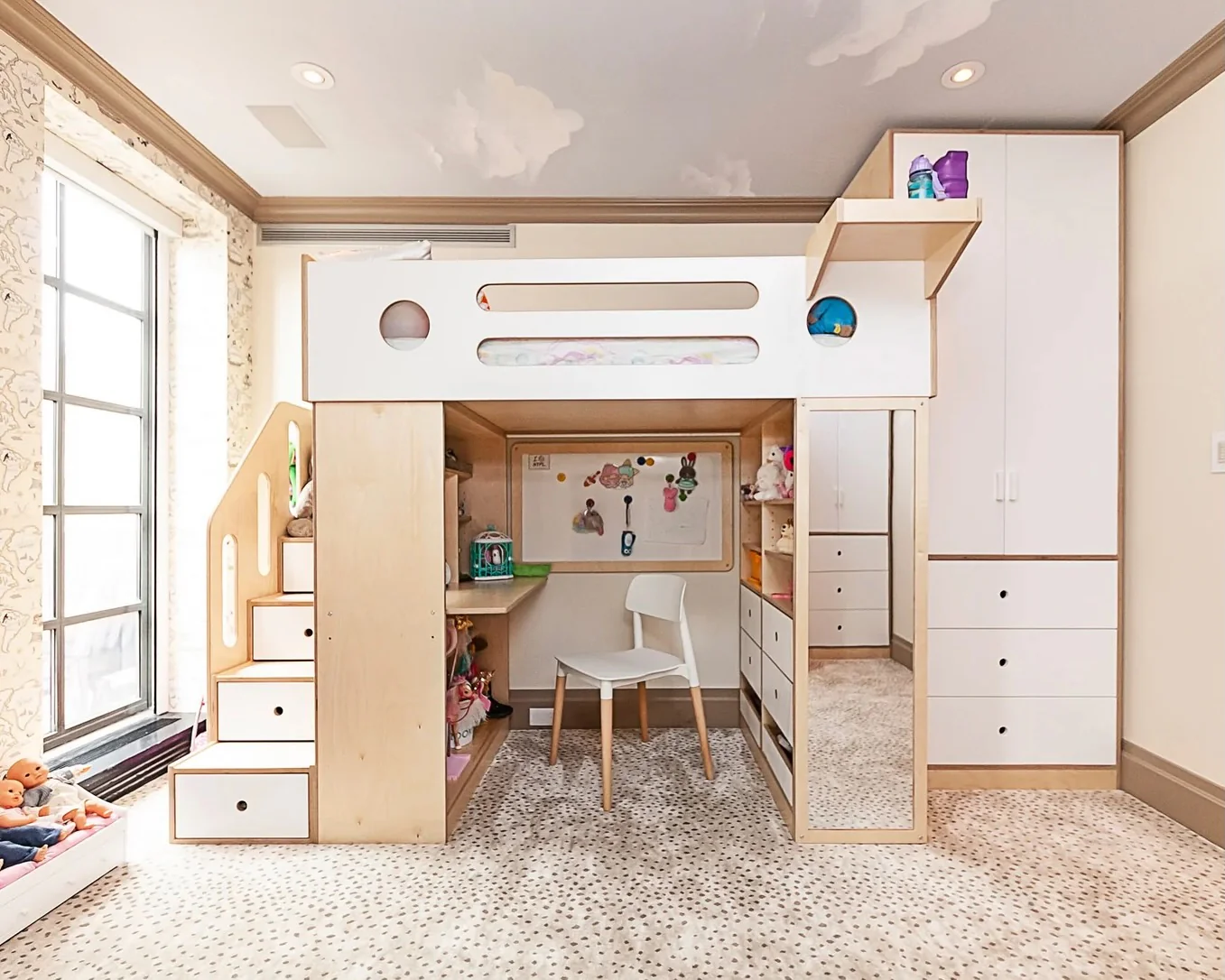
A diy loft bed ideas for small rooms strategy focuses on raising the sleeping area off the ground, freeing up valuable floor space underneath for a desk, seating, or storage. In a small room, this can effectively double the usable square footage. These beds can be built from dimensional lumber for a few hundred dollars—far less than most commercial options— and customized to fit the exact dimensions of your space.
Loft beds work best in rooms with 8+ foot ceilings. Standard twin mattresses work well for kids and teens; a full mattress loft is possible in most rooms. The key safety requirement is a sturdy guardrail on all open sides.
DIY Loft Bed Ideas by Use of Underneath Space
| Underneath Use | Setup | Best For |
| Study / homework desk | Desk + shelf + good lighting underneath | Kids, teens, students |
| Reading nook | Bean bag or floor cushions, fairy lights, small bookshelf | Kids’ rooms, cozy spaces |
| Extra storage | Wardrobe, chest of drawers, shelving units | Small rooms with no closet |
| Mini living area | Small sofa, TV mount, rug | Studio apartment loft beds |
| Workspace (adult) | Standing desk or office setup | Studio apartment / home office |
| Second sleeping area | Trundle bed or floor mattress | Shared kids’ rooms |
Basic DIY Loft Bed Build (Twin Size)
Materials needed: 4×4 posts (4), 2×6 boards (for the frame), 2×4 boards (for ladder and guardrails), plywood sheet (for slats or a solid platform), wood screws, and sandpaper. Standard cost is $150-$300 in materials.
- Cut four 4×4 posts to the desired loft height (typically 5-6 feet to the sleeping platform, leaving 3-4 feet clearance above)
- Build a rectangular bed frame from 2×6 boards – sized to the mattress with 2-3 inches clearance on each side
- Attach the frame to the posts with lag bolts – this is the most critical joint; use structural screws or carriage bolts for safety
- Add slats across the frame (2×4 boards spaced 2-3 inches apart) to support the mattress
- Build guardrails on three sides (minimum) – guardrails should extend at least 5 inches above the mattress top
- Build a ladder at the open end – angled is more comfortable; vertical is more space-efficient
No-Cut / Beginner DIY Option
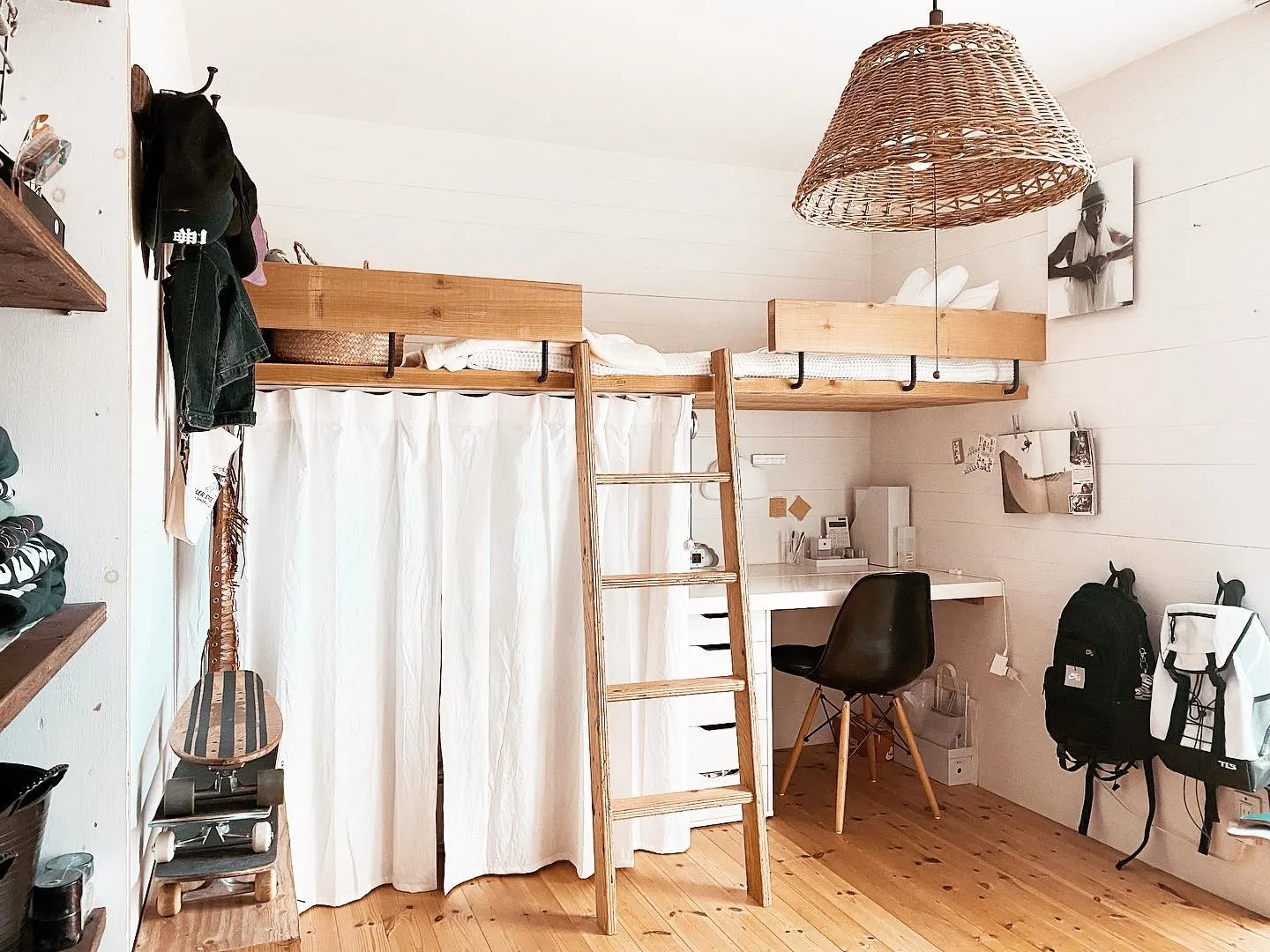
If you’re not comfortable with power tools, consider adapting an existing IKEA solution: the KURA reversible bed can be flipped to become a low loft bed (about 50 inches high). Add IKEA TROFAST shelving or a small desk underneath. It’s not custom, but it requires no cutting and takes about 2 hours to assemble.
Safety Requirements
- Guardrails on all sides except the ladder side – minimum 5 inches above the mattress top
- Test all bolted joints before use – the structure should have zero wobble
- Sand all edges – no sharp corners or splinters
- Use wood glue in addition to screws at load-bearing joints
- Consider anchoring the loft to the wall for additional stability, especially for children
Finish and Style Ideas
- Paint the entire structure white for a clean, Scandinavian look
- Add string lights along the underside railing for an inviting nook feel
- Hang curtains around the desk space underneath for a private study pod
- Use pegboard on the wall within the loft for bedside organization
Final Thoughts
A DIY loft bed is one of the highest-impact small room transformations you can make – converting two-dimensional floor space into three-dimensional living space. With basic woodworking skills and $150-$300 in lumber, you can build a sturdy, custom structure that fits the exact dimensions of your room. Prioritize safety at the joints and guardrails above everything else.