

Drive through almost any Las Vegas neighborhood and the rooftops tell the same story. Rows of concrete and clay tile in sand, terracotta and slate gray stretch from Summerlin to Henderson. Tile earned that spot for good reason. It shrugs off sunlight, it will not burn, and a well made concrete tile can outlast the mortgage on the house below it. Yet many homeowners assume the tile is what keeps rain out of the attic. For the most part, it is not.
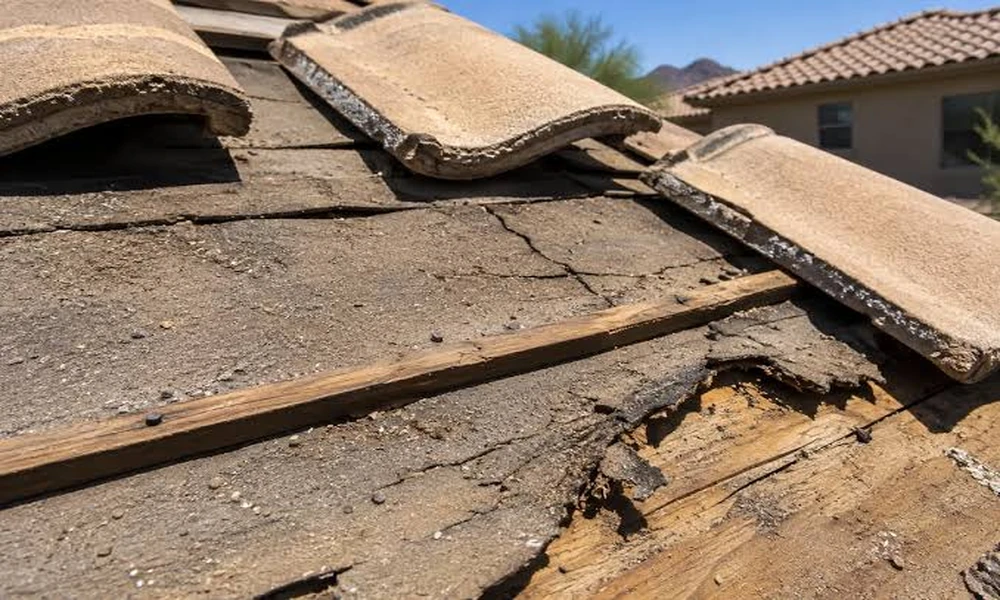
The real waterproofing on a tile roof is the underlayment, a membrane laid across the roof deck before a single tile goes on. Tiles shed most of the water and shade that membrane from the sun, but rain still slips through the gaps between pieces, especially when wind pushes it sideways. Local crews such as Vegas Born Roofing handle tile replacement, underlayment work and inspections across the valley, and the pattern they run into is a familiar one: tile that looks nearly new sitting on top of a membrane that has cracked, curled or turned to flakes.
That mismatch comes down to heat. The tile can take decades of punishment, while the layer beneath it ages far faster. Knowing why can save a homeowner from paying for a full roof when only part has failed.
Heat Does the Slow Damage
Summer in Southern Nevada means long runs of days above 105 degrees, and roofs sit at the very top of that heat load. The EPA explains that a conventional roof in full summer sun can reach 150°F or more, while a more reflective surface can run dramatically cooler under the same conditions. Tile helps by creating a shaded air gap, but the space under it still bakes for months on end.
Older homes often have asphalt saturated felt as their underlayment. Felt depends on oils to stay flexible. Year after year of extreme heat drives those oils out, and the paper turns brittle. It splits along batten strips, tears around nail holes and shrinks away from flashing at walls and chimneys. In cooler regions felt under tile may last a long time. In the Las Vegas valley, plenty of homes built during the big housing boom are now reaching the point where their original membrane has simply cooked away.
Monsoon Season Finds Every Weak Spot
Las Vegas averages only around four inches of rain a year, which is exactly why underlayment failure hides so well. A cracked membrane can sit unnoticed through months of dry weather. Then the monsoon arrives, usually running from mid June through the end of September, and a single storm can drop heavy rain in under an hour with strong gusts behind it.
That wind matters. It drives water up and under tile laps where it would never reach in a gentle rain. Dust storms add another layer of trouble. Fine desert grit and windblown debris pile up in valleys and at bird stops, forming small dams. Water backs up behind them, spills sideways and finds whatever weak point the aging membrane offers.
Clues You Can Spot Without Climbing Up
Most early warning signs are visible from the ground, a ladder at the gutter line, or the attic with a flashlight. A few to watch for:
Black or brown flakes on the patio or in gutters. These are often fragments of disintegrating felt that worked their way out from under the tile.
Slipped, cracked or missing tiles. A single gap exposes the membrane directly to sun, which speeds its breakdown in that spot.
Dark rings or streaks on attic sheathing. Check after the first storm of the season, before the desert air dries the evidence.
Rusted or lifted metal in valleys and along walls. Flashing does a lot of heavy lifting on tile roofs, and corrosion there often points to standing water.
A ceiling spot that appears and fades. Intermittent stains are easy to dismiss in a dry climate, but they usually mean water is reaching the deck every time it rains.
Repair Options Are Wider Than People Think
When underlayment fails, a full tear off is not always the only answer. Roofers generally talk about three levels of work.
Spot repair covers broken tiles, small flashing failures and localized leaks. It makes sense when the membrane is still in decent shape overall.
A lift and relay, sometimes called an underlayment replacement, is the most common fix for aging tile roofs in the desert. Crews remove the tiles, stack them on the roof, strip the old membrane, repair any soft decking and install new underlayment. The original tiles then go back on, with damaged pieces swapped out. Because concrete tile can usually be reused, this often costs less than starting from scratch. One caveat is that some older tile profiles are discontinued, so salvaged spares from the project are worth keeping in the garage.
Full replacement becomes the better choice when the tiles themselves are failing. Some early lightweight concrete tiles grow porous and crumble with age, and no new membrane can fix that.
Newer underlayment options have changed the math too. Synthetic membranes and adhesive backed sheets rated for high temperatures hold up far better in desert heat than traditional felt, and many installers now use two layers in vulnerable areas such as valleys and low slope sections.
Foot Traffic Breaks More Tile Than Weather
Sun and storms get most of the blame, yet people walking on the roof crack a surprising share of tiles. Solar installers, satellite technicians, HVAC crews and homeowners hanging holiday lights all add stress. Concrete tile can handle weight near its lower edge where it overlaps the tile beneath, but a boot planted in the middle of an unsupported span can snap it cleanly. Those cracks rarely show from the street, so asking anyone who goes up to photograph the area before and after their work helps catch damage early.
Timing the Work Around the Desert Calendar
Spring is the most practical time to look closely at a tile roof in Southern Nevada. Temperatures are mild, the monsoon has not started, and there is still time to schedule repairs before the first big storm. A second check after any severe wind event is also worth the effort, since slipped tiles and debris dams tend to follow strong gusts.
Cooler months also make for better workmanship, since membranes and adhesives behave better on a deck that is not scorching. A roof that gets attention on that schedule tends to stay a long term asset instead of becoming a sudden expense in the middle of August.